

Why did WhatsApp Stop Showing "Typing..."
It might not be that straightforward. Share your answers and get a chance to win the shoutout slot

Hello hello hello,
We’re back with the second edition of the Think Like a PM series.
If you missed the first edition, you can catch up here. It explains why this series is the best learning experience on the internet.
It also features the first real-world challenge: Instagram’s new downvote button.
Don’t forget to check the comments—there’s a lot to learn from how people think about this feature.
Today, we’re here with the second edition of the Think Like a PM series.
This Week’s Challenge: WhatsApp’s Dancing ‘Three Dots’
WhatsApp recently made a small but interesting change.
Instead of the familiar "Typing..." text at the top of chat windows, WhatsApp now shows bouncing dots […] at the bottom.
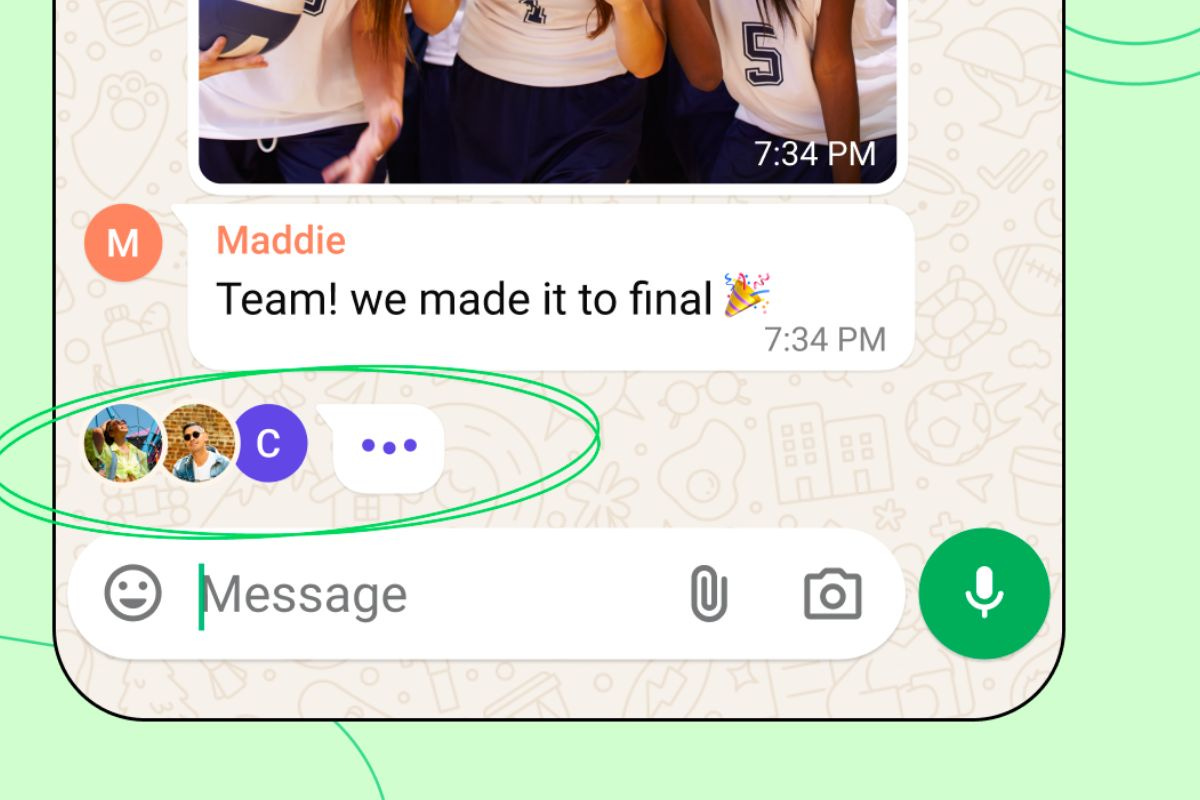
What we know:
"Typing..." has been removed.
The bouncing dots now appear at the bottom when someone is typing.
WhatsApp didn’t announce this change—no blog posts, no tweets.
The update rolled out quietly but is visible to many users now.
Think like a PM:
What is the larger goal behind this change?
Why would WhatsApp risk changing a feature everyone is so used to?
What metrics would you use to measure success?
Drop your thoughts in the comments! The best responses will be featured in next week’s email.
Let’s make this the #1 real-world learning space for PMs.
Shoutouts!
We received a lot of interesting answers to last week’s questions. The two that stood out:
This one from
: highlighted how content creators get unnecessary hate. Downvoting can help curb that. I agree!PRODUCT LEGACY (Ayush) had solid insights on how this might reduce toxicity without public shaming. I resonate with this thought.
Thoughts from the JAPM team:
Downvoting comments ≠ Downvoting posts. This feature only affects comment sections, not the main content itself.
Early commenting behavior can be problematic. On platforms like Instagram and Twitter, people rush to comment first on popular creator’s posts, often with irrelevant responses. Since early comments get more visibility, they can reduce the quality of discussions. Downvoting can help by hiding or deprioritising irrelevant comments.
Downvotes give users a simple way to disagree. Before this, if someone disagreed with a comment, they had two choices:
Ignore it.
Reply to it.
Most people chose the first option. Some chose the second. Now, with a downvote button, some from the first group will start engaging, and some from the second will switch to downvoting instead of replying. (A similar shift happened when Facebook introduced reactions like Love, Sad, and Angry.)
Potential algorithmic benefits. If Instagram collects enough downvote data, it could refine its ranking system to show better comments first. But this only works at scale.
Metrics to track success
Total number of downvotes → Measures awareness and adoption.
Increase in total time spent per week → If Instagram reduces irrelevant/toxic comments, users should have a better experience and spend more time on the platform.
Increase in positive engagement for creators → If discussions improve, creators may be encouraged to post more relevant content.
Guardrail Metrics:
Total time spent per week should not decrease.
Total revenue per week should not drop.
See you in the replies,
—Sid
Bottom of the window is where a user's focus naturally falls.
It's also enlarged by the OS for those that elect to switch to larger display fonts.
And finally, no more having to translate "typing" to an appropriate lauguage or phrase for non-English speaking users.
I'm not too convinced about meeting industry standards. Primarily because WhatsApp is by far the mose used messaging app. And in that sense they themselves set a lot of the benchmarks.
Also, why do you think the drop off rate is important?